Type 2 diabetes is one of the fastest-growing health problems in Asia’s busy cities. Long working hours, sweet drinks, late dinners and very little movement all push blood sugar up — and stress makes it worse.
Yoga cannot replace medical treatment. But together with your doctor’s plan, it is a gentle, sustainable way to move more, manage stress and build healthier daily habits.
How yoga supports blood sugar
- Muscles use sugar: active practice such as Sun Salutations and standing poses helps working muscles take up glucose.
- Lower stress hormones: chronic stress raises cortisol, which pushes blood sugar up. Breathwork and relaxation calm this response.
- Weight management: regular practice builds strength and supports a healthy body weight.
- Better sleep: poor sleep is linked to cravings and blood sugar swings; yoga helps you rest.
- Mindful eating: yoga builds awareness of hunger and fullness, making healthier choices easier.
7 helpful poses and practices
- Surya Namaskar (Sun Salutation): start with 3–5 slow rounds and build up gradually.
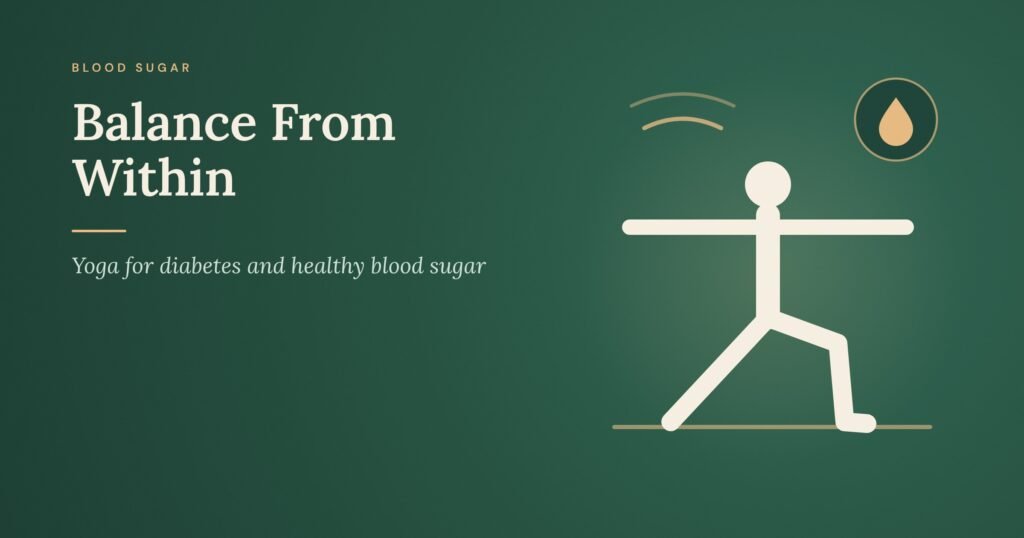
- Warrior II (Virabhadrasana II): builds leg strength, the body’s largest muscles.
- Chair pose (Utkatasana): strengthens thighs and glutes.
- Seated twist (Ardha Matsyendrasana): gentle twisting for the abdomen and spine.
- Bow pose (Dhanurasana) or half bow: opens the front body; skip if you have back pain.
- Legs up the wall (Viparita Karani): restful and good for tired legs and feet.
- Nadi Shodhana and Shavasana: 10 minutes to calm the nervous system.
Safety tips
- Check your blood sugar before practice if you take insulin or medicines that can cause low sugar.
- Keep a quick sugar source (juice or glucose tablets) in your bag.
- Do not practise on a completely empty stomach or right after a big meal.
- Check your feet after class if you have reduced feeling in them.
- If you have diabetic eye disease, ask your doctor about inversions and straining.
A simple weekly plan
- 2–3 active classes (Hatha or Ashtanga) for strength and movement
- 1 Restorative class or Yoga Nidra session for stress
- 10 minutes of breathing at home every day
- A 15-minute walk after dinner
Practise with us
At Aadi Yoga Center Bangkok we welcome students at every fitness level. Start with Hatha classes, or book a private One-on-One session so Master Aadi can build a routine that suits your energy, medication and goals.
Find us on Sukhumvit Soi 10, near Asoke and Benchakitti Park. Book on LINE or WhatsApp at +66 96 314 0218 or visit www.aadiyogacenter.com.
This article is general information, not medical advice. Keep following your doctor’s treatment plan and tell your teacher about your diabetes before class.